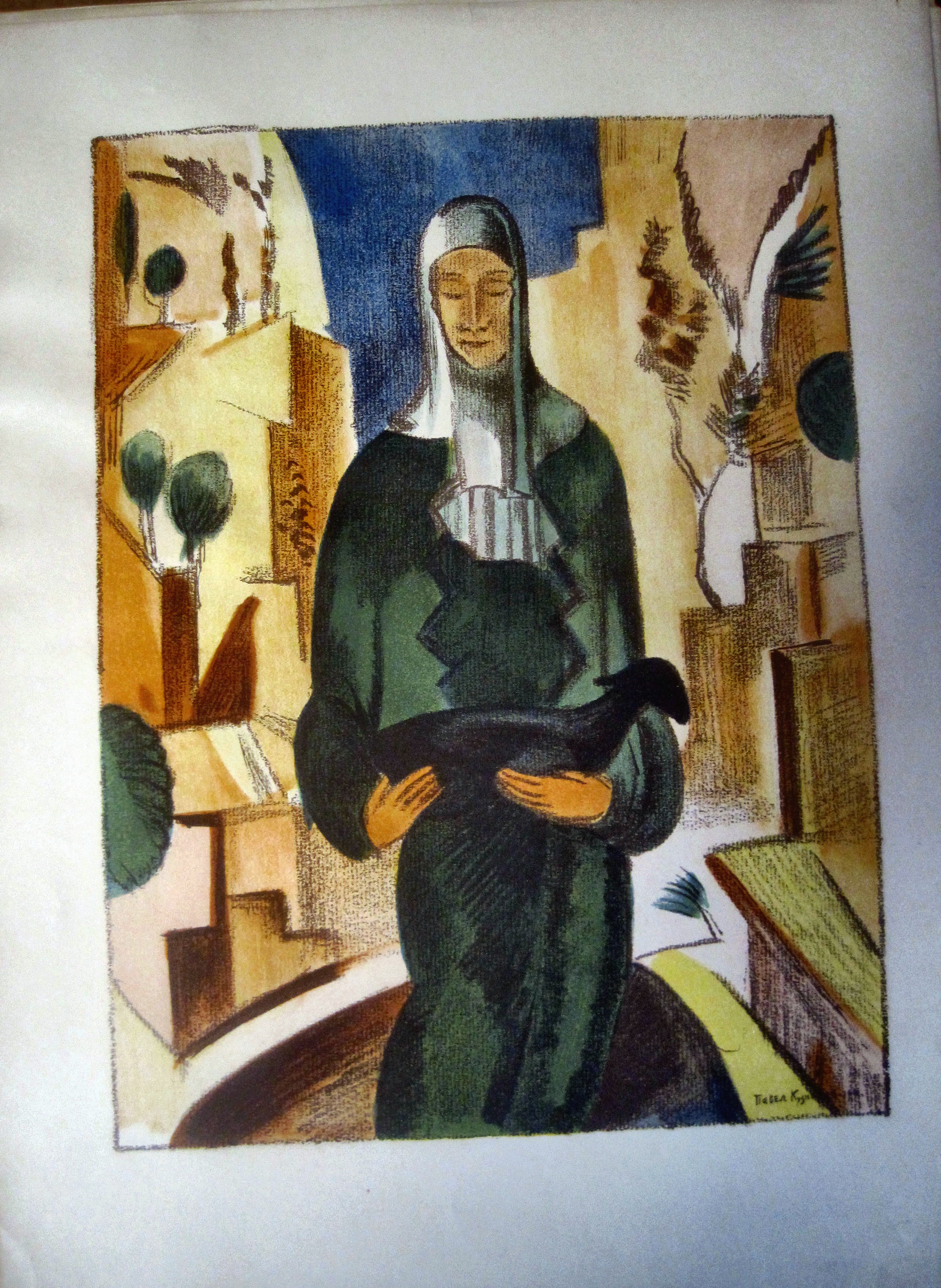
Woman Holding Grapevines signed and dated in Cyrillic 'P. Kuznetsov 1912.' (lower left) tempera on board 12¼ x 11¼ in. (31.1 x 28.6 cm.) Painted in 1912 Provenance: Antonina Nejdanova (Letter on the back from the artist asking her to participate in a charity concert on behalf of students of Moscow Academy of Art- НЕЖДАНОВА, АНТОНИНА ВАСИЛЬЕВНА (1873–1950), русская певица (лирико-колоратурное сопрано);Christies, New York, Sale 18.4.2007, lot 89 illustrated in Русское Искусство magazine Moscow, 2015 v4 p 85. . In American, 20th Century, pressed wood and gilded Stanford-White style original frame made by Newcomb-Macklin

“Buchara”. Color pastels on tan wove paper mounted on heavy card stock, circa 1912. 15 ½ x 11” Signed in Cyrillic in charcoal, lower right. With three labels on verso: 1. Confirmation of provenance – bought in Moscow in Artist’s apartment from his widow E. M. Bebutova; 2. Confirmation of being an item from the collection of Prof. Gorshin S.N., USSR, Himki.; 3. Exhibition label of Art Museum in Mogilev, USSR (see to the right) Provenance Swann Auction Galleries September 19, 2002 New York, NY, US


«La nuit en Orient» [1906]Oil on canvas laid on cardboard, signed and dated 190…on the back 12 x 21 cm In American, 20th Century, pressed wood and gilded Stanford-White style original frame made by Newcomb-Macklin. Provenance: Collection Georgy Khatsenkov; MC Fine Arts Gallery, Monaco, VENTE DE TABLEAUX ET DE SCULPTURES RUSSES - Samedi 7 Août 2010 Lot n° 22 Certificate of authenticity issued by Tretiakov Gallery for Mr. Hatzenkov in 2005 is attached.

Winter night. Oil on canvas laid on board cm.40,5X55cm, signed low left and dated 1902. Provenance: Aguttes November 6, 2009 lot 7 Neuilly sur Seine, France In the present item, the artist transformed his landscape subject by generalizing the forms depicted. Typical of Kuznetsov’s Symbolist works, the image appears to dissolve into the background, giving the scene an unreal, dream-like quality and creating an almost abstract effect..


Evening on the balcony, oil/board, signed with Cyrillic initials low right, 24.5x32 cm c. 1912. Compare: Саратовский государственный художественный музей имени А.Н. Радищева "Гадание. Вечер" 1912


Blowballs. Oil/canvas laid on cardboard. Inscribed with provenance info on reverse. 14 x11". In original French XX century gilded and hand incised reverse slope frame. Provenance: bought from the Artist's widow by the previous owner. Bibliography: “A Time to Gather… RUSSIANART From Foreign Private collections”, State Russian Museum, Saint-Petersburg, Palace Editions,2008, illustrated on p.21.

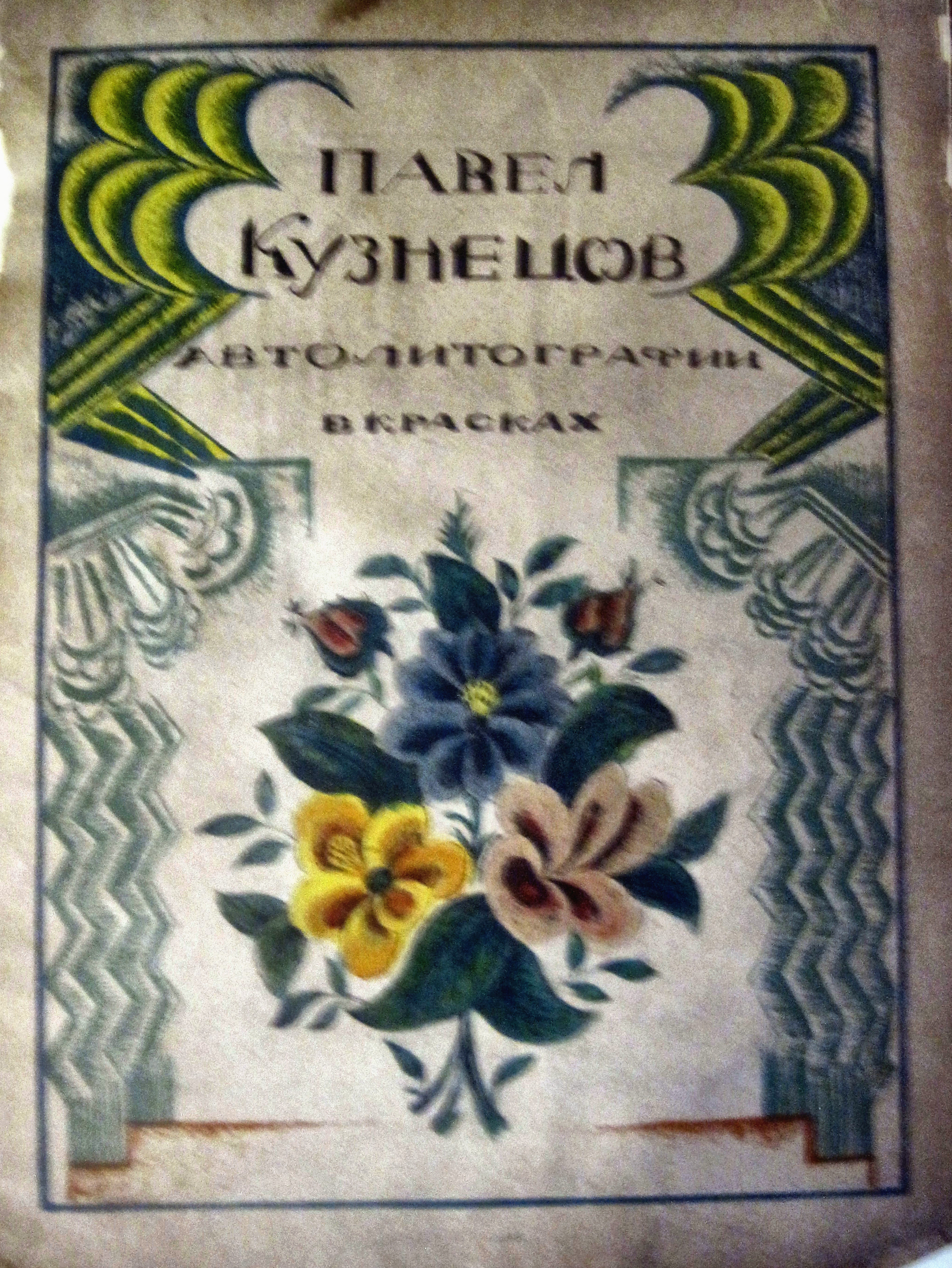
Kuznetsov,
P. Gornaya Bukhara. Color autolithographies.
Moscow: State Publishing House; 1-st sample
model-lit. "Mospoligraf", 1923. 12 iustrations 41.2 x 30.1 cm. In a
folder with pasted front and back covers. A suite of twelve color
autolithographs with a lithographed title page, one sheet with a foreword and a
table of contents, two sheets with vignettes. Full set.
Кузнецов, П. Горная Бухара. Автолитографии в красках.М.: Государственное издательство;
1-я Образцовая
типо-лит. «Мосполиграф», 1923. 12 л. ил. 41,2 x 30,1 см. В папке с наклеенными передней и задней обложками.Все литографии в коллекционной сохранности. Сюита из двенадцати цветных автолитографий с
литографированным титульным листом, один лист с предисловием и оглавлением, два
листа с виньетками. Полный комплект.